
Africa’s Tech Data Is Talking. Too Many Leaders Aren’t Making the Most of It.

Every year, Google’s Year in Search and Spotify Wrapped make a simple point: data does not become powerful when it is collected. It becomes powerful when it is interpreted. The data resonates not because they are from two of the biggest technology companies in the world, but because they are intentionally curated. They reflect behaviour, emotion and context - what people cared about, worried about and paid attention to when it mattered most.
Across Africa’s technology ecosystem, companies now operate at meaningful scale. They move money, medicines, goods and people, shaping access, efficiency and outcomes across entire sectors. In doing so, they generate extraordinary volumes of behavioural data. Yet much of this insight remains locked inside dashboards, reports and internal reviews, invisible beyond the organisations that produce it.
As African tech companies mature, the strategic question shifts. It is no longer can we scale? but how are we understood as we scale? Data storytelling is one of the most underutilised tools available to leaders navigating this transition. When data is treated purely as measurement, it delivers accountability. When treated as narrative infrastructure, it delivers legitimacy. The difference matters.
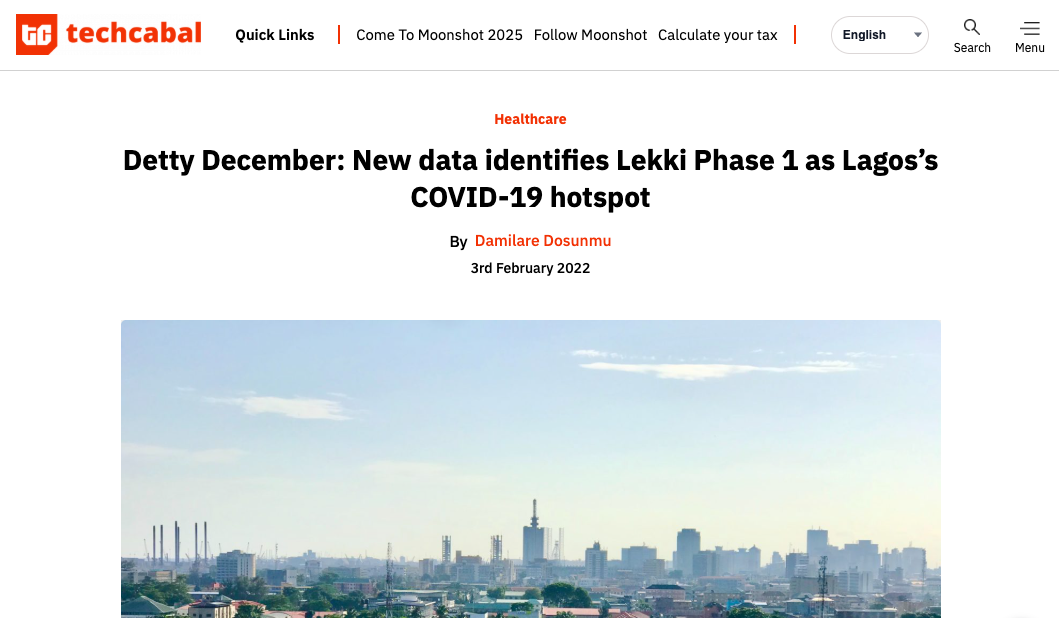
The most effective data stories are not about size or spectacle. They are about relevance. During Nigeria’s 2021 “Detty December” period, Remedial Health noticed an unusual spike in pharmacy orders for antimalarial drugs in parts of Lagos such as Lekki Phase 1 - far beyond typical seasonal patterns. Rather than dismissing the surge as routine, the company interrogated the data. What appeared to be a malaria trend was, in fact, an early signal of a COVID outbreak driven by festive travel and social activity. Reported by TechCabal, the insight reframed Detty December through a public-health lens, showing how cultural behaviour and disease transmission intersect - and how frontline pharmacy data can surface emerging risks faster than formal reporting systems.
A similar dynamic was evident in Autochek’s analysis of car-loan applications across multiple African markets. Drawing on transaction data from its automotive financing platform, Autochek identified a striking pattern: African millennials were far more likely to apply for car loans than any other age group. In context, the insight pointed to deeper structural shifts - a generation increasingly comfortable with formal credit, viewing mobility not just as convenience but as economic leverage. It reflected changing attitudes to ownership, the normalisation of consumer finance, and the role of reliable transport in work, entrepreneurship and upward mobility across African cities.

Neither story required millions of users. Both reframed how their sectors could be understood. That is what narrative infrastructure does: it shapes understanding before opinion hardens.
For mature technology companies, this is where data storytelling becomes strategic. It shapes how markets are interpreted, how trust is built and how influence is earned. It allows organisations to define the narrative terrain rather than react to it. Silence, by contrast, is not neutral. In the absence of clear, contextual insight, others - often with less nuance - will explain your market for you.
The opportunity is hiding in plain sight. African tech companies already possess the raw material for some of the most important stories about the continent’s future. The choice facing leadership is whether to treat data solely as evidence of performance, or as a medium for meaning.
At Talking Drum, we help Africa’s technology leaders turn data into narrative infrastructure - surfacing insight, shaping perception and building long-term trust with investors, policymakers, media and the public.
If your organisation is sitting on rich data but struggling to translate it into stories that shape how you are understood, we should talk - hello@talkingdrumcomms.com